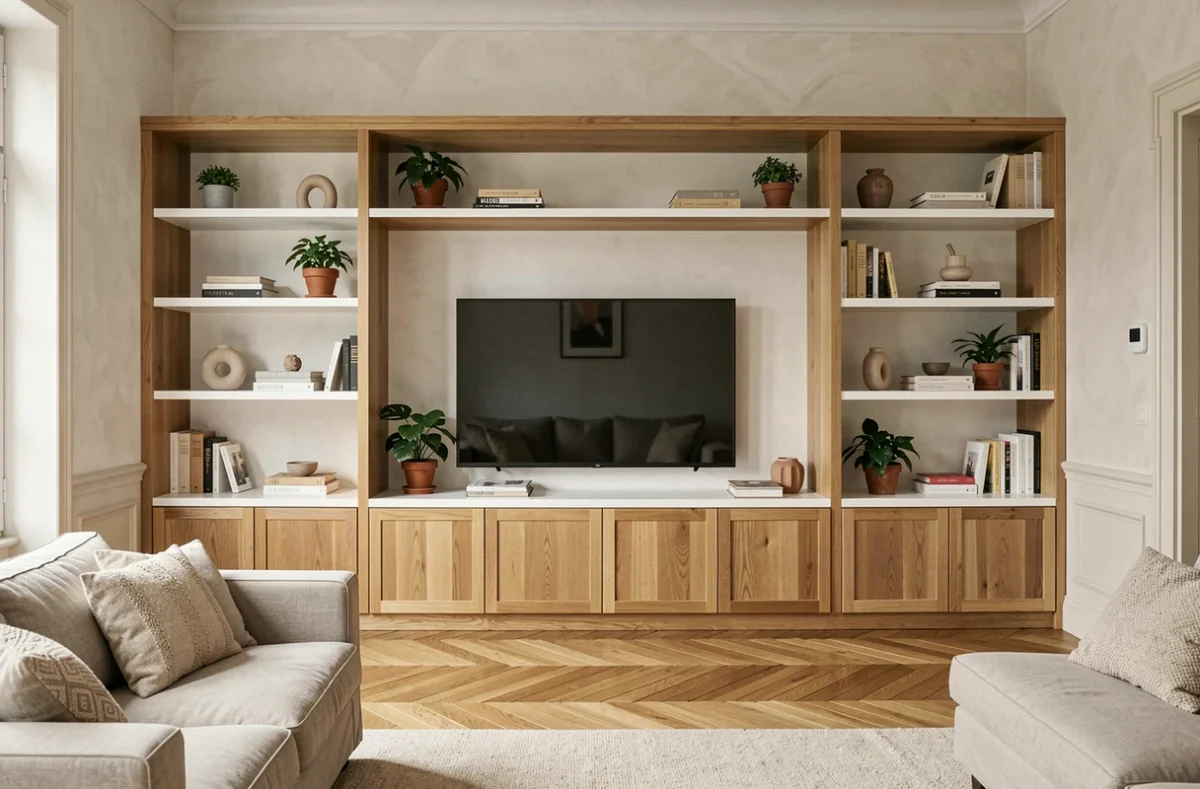
A four-meter living room wall, a 65-inch TV, a collection of heavy art books, and a set-top box to connect without leaving cables trailing: that’s the practical starting point for a custom TV bookcase. The success of this kind of installation depends not on how it looks when finished, but on three technical constraints that are often underestimated: shelf load, screen ventilation, and cable routing.
Book weight and shelf strength: getting the sizing right
A unit that combines book storage with a TV stand is nothing like a simple low TV cabinet. Illustrated books, encyclopedias, and large-format volumes create a much greater permanent load than a few decorative objects. If a shelf is too thin or too long, it will start to sag within a few months.
To design a reliable custom TV bookcase, first calculate the span of each shelf—the distance between two support points. The greater the span, the thicker the panel needs to be, or the more likely you are to need an intermediate upright. The NF DTU 36.2 technical standard provides a basis for carpenters sizing this type of unit.
A shelf that sags under a permanent load will never straighten out again. It’s better to plan for reinforcements from the outset than to make corrections after installation. Materials also behave differently: melamine-faced particleboard is less durable than dense MDF or a braced solid-wood shelf.
- Load-bearing vertical supports should rest on the floor or be fixed to the wall, not simply fitted into the unit’s frame.
- The minimum thickness of a book-loaded shelf depends on its span: the shorter the span, the thinner the panel can be.
- A rigid back panel (rather than flexible hardboard) helps stabilize the whole unit, especially when it is tall.
TV ventilation and access to equipment
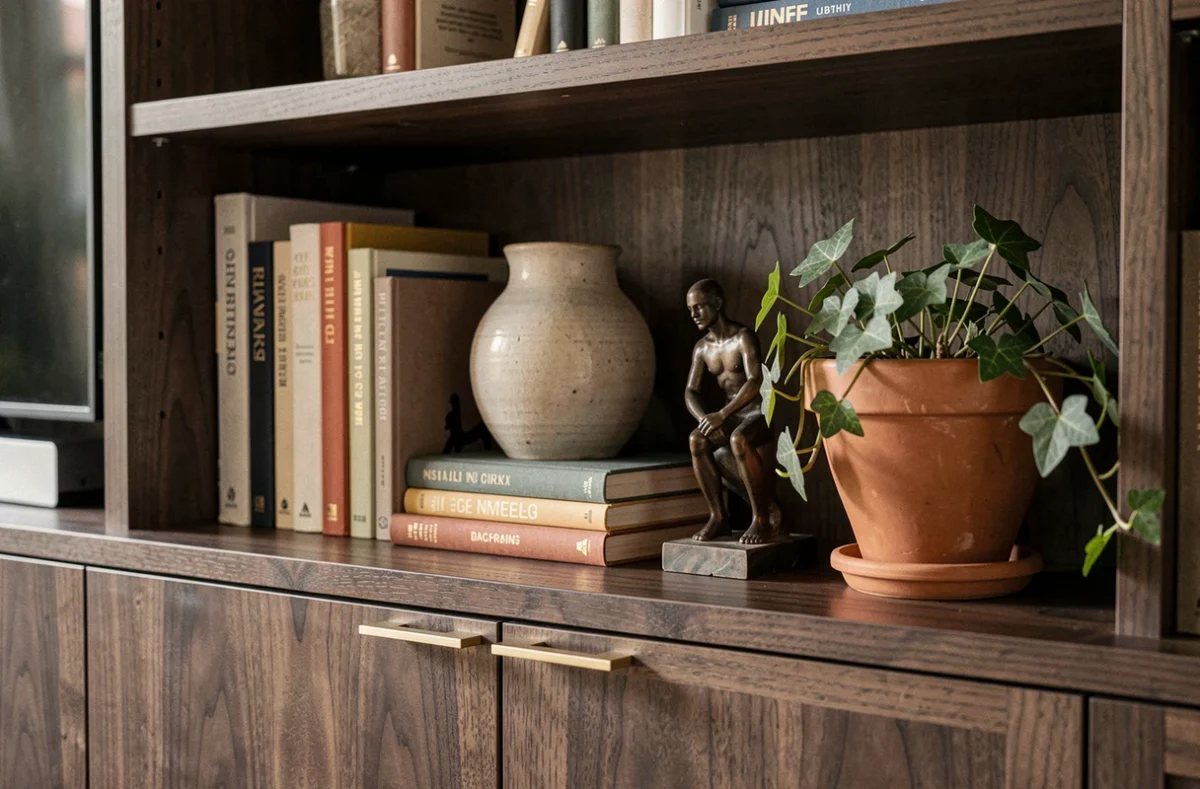
Recessing a TV into an enclosed niche can create a heat trap. The screen, set-top box, soundbar, and game console all generate heat when in use. Without airflow, the temperature inside the niche can shorten the lifespan of components and cause the device to shut down automatically.
The first rule is to follow the TV manufacturer’s instructions. Each model requires minimum clearance around the chassis (above, at the sides, and behind). A custom unit should allow for these clearances from the planning stage, rather than sacrificing them for a more compact look.
Practical ways to improve airflow
An opening at the top of the niche can let hot air escape through natural convection. For units with doors, discreet ventilation grilles or a small, quiet fan can make all the difference.
Access to HDMI and USB ports and power connections is another challenge. If the back of a unit is completely closed, you have to take everything apart to connect a new device. Planning for a removable back panel or access hatch saves you the hassle. Some carpenters fit a hinged panel at the back of the TV niche, making it possible to work on the connections without moving the unit.
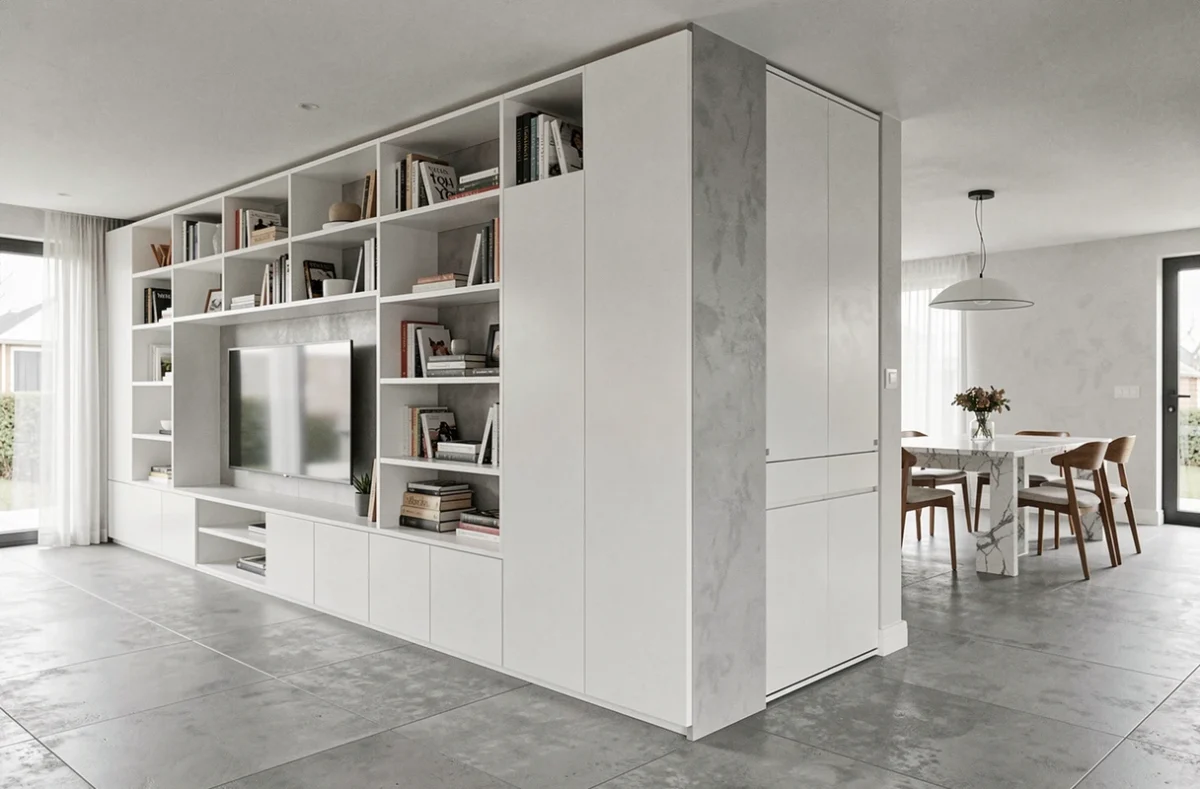
Power outlets and cable routing: plan ahead before installation
It’s common to see TV bookcases delivered and installed, only for cables to emerge from the bottom because no cable duct was planned. The location of power and network outlets should be decided before the unit is made, by comparing the furniture plan with the electrical installation plan.
Renovations make things more complicated: existing outlets are rarely in the ideal place. Having an electrician come in before the carpenter makes it possible to reposition wall outlets at the right height, behind the future TV niche or at the unit’s technical panel.
Hide cables without making maintenance difficult
The best-designed custom units incorporate vertical cable channels in the uprights and horizontal routes behind the baseboards. This avoids visible cable trunking stuck to the wall.
- A cable grommet in the back of the TV niche lets you connect the screen to equipment stored below.
- Oblong openings (rather than round ones) make it easier to pass HDMI or SCART plugs through without forcing them.
- A technical gap of a few centimeters between the back of the unit and the wall leaves room to add or remove a cable after installation.
Wall mounting and stability of the TV bookcase
A tall unit loaded with books and supporting a screen concentrates a lot of weight over a small floor area. There is a risk of tipping, especially in a home with young children. Wall mounting is not a decorative option; it is a safety measure that depends on the type of wall.
A metal-stud plasterboard wall requires a different fixing method from a solid brick or concrete wall. Standard expansion plugs will not hold in plasterboard under heavy loads. In that case, use Molly bolts or through-fixings that reach the load-bearing structure behind the partition.
Checking the anchor points before installation helps avoid unpleasant surprises. A reputable carpenter will ask what type of wall you have and adapt the fixing system accordingly. A unit that is not properly secured to the wall is dangerous, regardless of how light it seems when empty.
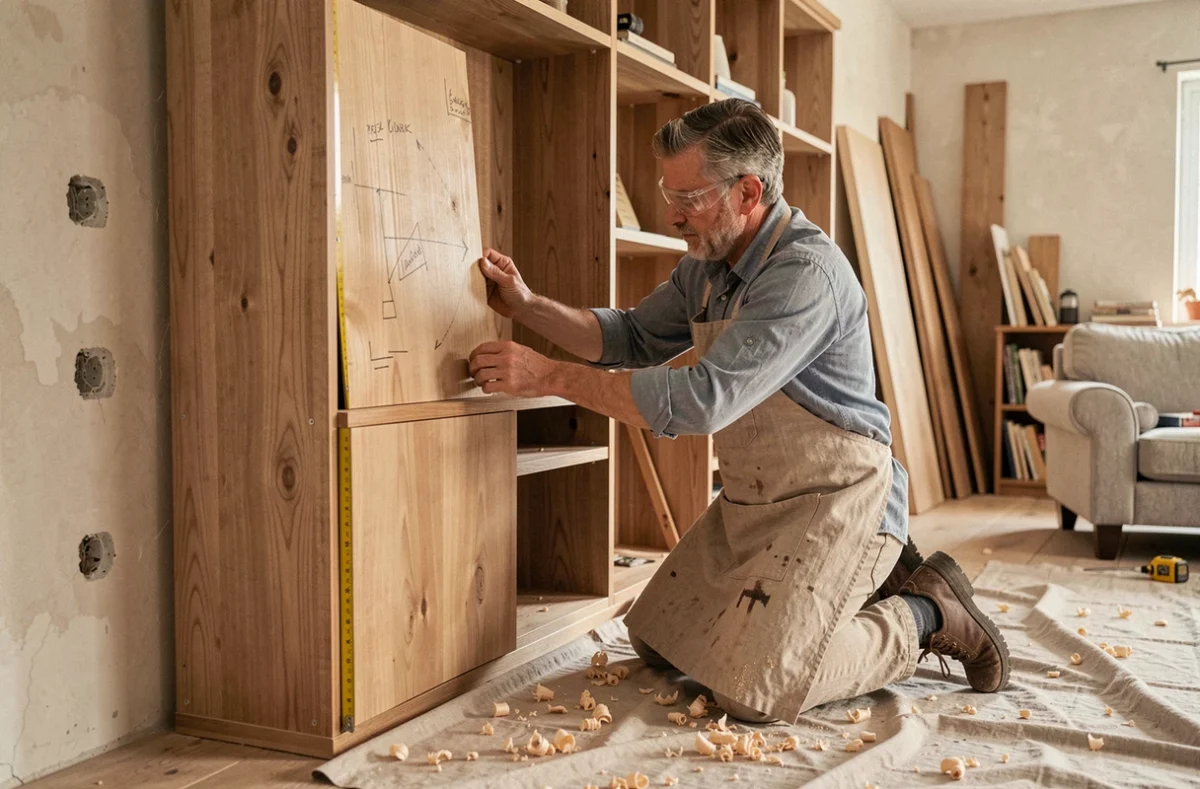
The best custom TV bookcase is one whose elegance is all you notice, because the structure, ventilation, cabling, and fixings were all taken care of in advance. Start with these four technical considerations to ensure the unit remains functional and safe for years—not just on installation day.