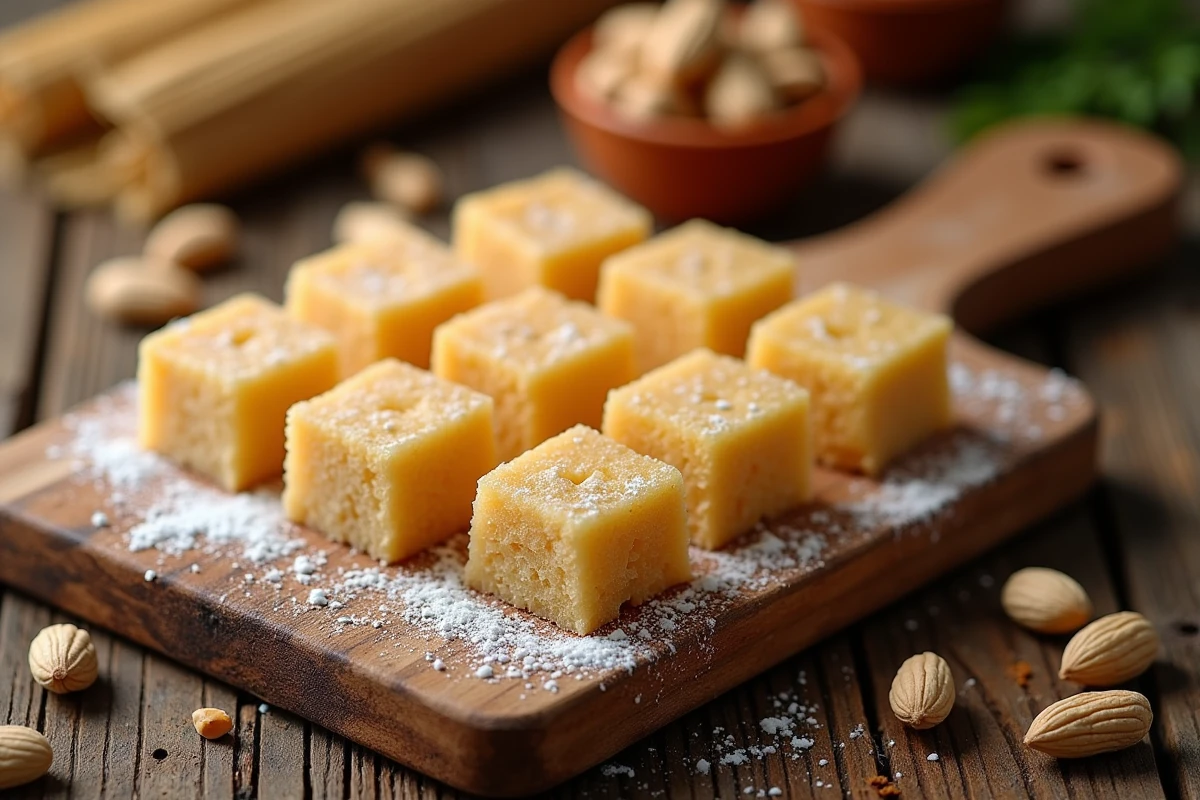
The Brazilian paçoca consists of three ingredients, but its crumbly texture and intense roasted peanut flavor set it apart from all the candies you know. This small sweet, a staple of Festas Juninas (Brazilian June festivals), relies on a precise balance of roasting, grinding, and compression. Understanding these steps allows you to successfully make the recipe at home and adapt paçoca to other desserts.
Roasting Peanuts: The Gesture That Determines the Flavor
Have you ever noticed that a dry-roasted peanut doesn’t have the same aroma as a peanut roasted in oil? The paçoca entirely depends on this difference. Dry-roasted peanuts, without added fat, are used to achieve a concentrated flavor and a texture that easily breaks down into powder.
The roasting is done over medium heat in a pan or in the oven. The goal is to achieve a uniform golden color without burning the thin skin that surrounds each peanut. Over-roasting makes the paçoca bitter, as the natural oils in the peanut oxidize quickly beyond a certain heat threshold.
Once roasted, the peanuts must cool completely before grinding. If you blend them while still warm, the released oil turns the powder into a sticky paste, impossible to compress into candies. This resting time, often overlooked, makes the difference between a paçoca that crumbles elegantly in the mouth and a compact mass without lightness.
To delve deeper into each step with detailed proportions, the paçoca recipe on Gourmand Sans Gluten guides the process from start to finish.
Three Ingredients of Traditional Paçoca: The Role of Each
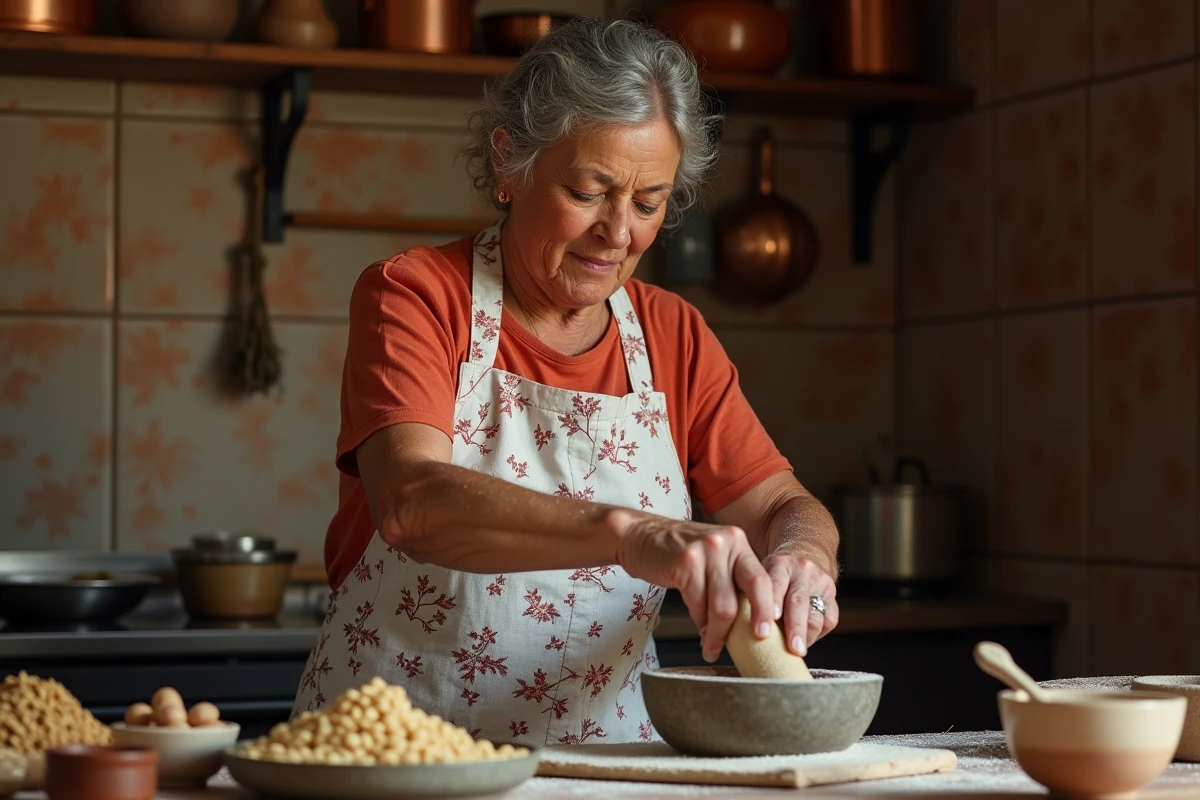
The authentic recipe contains only roasted peanuts, sugar, and a pinch of salt. Each component serves a specific function in the final texture.
- Roasted peanuts provide the natural fat that binds the powder during compression, in addition to all the aroma. The fresher they are, the more fragrant the paçoca will be.
- Sugar (often Brazilian crystal sugar, slightly coarser than French powdered sugar) plays a dual role: it softens the intensity of the peanut and contributes to the cohesion of the candy through capillarity when the powder is packed.
- Salt, in minimal quantity, amplifies the perception of peanut flavor. Without it, the paçoca seems flat, even with a good amount of sugar.
Some versions add cassava flour (farinha de mandioca). This addition alters the texture: cassava flour makes the paçoca drier and crumblier. The version with cassava is more similar to paçoca de colher (spoon paçoca), served loose at street festivals, while the version without cassava produces paçoca rolha, compressed into small cylinders.
Grinding and Compression: Creating the Crumbly Texture
The grinding is the most sensitive step. A food processor with short pulses yields the best result. You want a coarse powder, not a smooth paste. If you blend too long, the peanuts release their oil and you end up with peanut butter.
Three to five pulses of two seconds are enough to achieve the right granularity. Some grains remain visible, while others are reduced to fine flour. This heterogeneous mixture creates the characteristic texture: the paçoca melts on the tongue while maintaining a slight crunch.
Compression is done in a mold or simply by hand. The sweet powder is firmly packed into a small cylinder or circle. The pressure must be firm: too light, and the candy collapses at the first contact. Too strong, and it becomes hard and loses its melt-in-the-mouth quality.
Tip for Clean Unmolding
Line the bottom of the mold with plastic wrap. After compression, turn the mold upside down and gently pull on the wrap. The candy comes out intact. This method prevents breaks that make presentation difficult, especially if you are preparing paçocas for an event.
Reinvented Paçoca: Using It as an Ingredient in Other Desserts
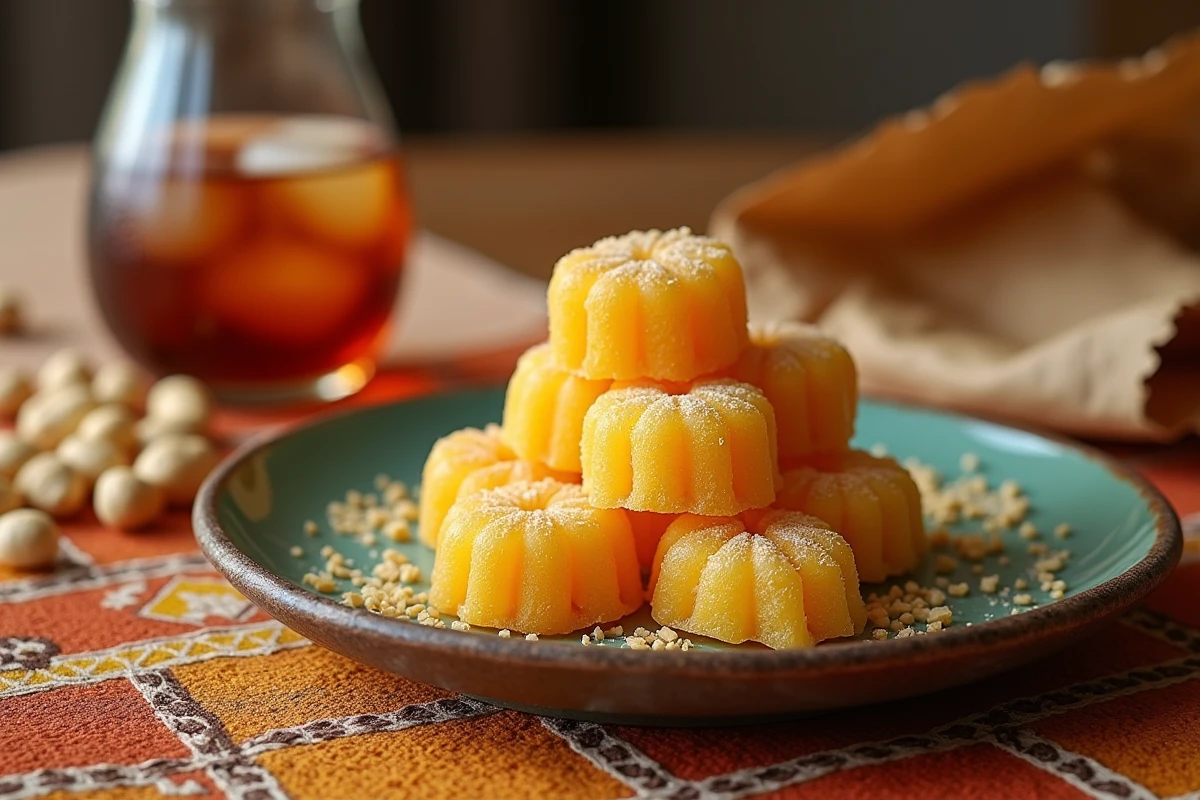
Paçoca is not limited to individual candies. In urban Brazilian bakeries and during the Festas Juninas held in Europe (notably in Paris and Villeurbanne), it appears as a component of more elaborate desserts.
Crumbling paçoca is a great substitute for classic crumble on a cheesecake, a verrine, or a brownie. Its richness in peanuts adds a sweet-salty dimension that most butter-flour crumbles do not offer.
Some common uses in contemporary Brazilian cuisine include:
- As a topping on brigadeiros (Brazilian chocolate truffles), where the crumbled paçoca contrasts with the creaminess of the brigadeiro.
- As an insert in brownies: a layer of crushed paçoca is placed in the middle of the batter before baking. The result gives a crumbly center to the brownie.
- As a tart crust base, mixed with a bit of melted butter, as an alternative to a classic biscuit base.
This versatility explains why paçoca is gaining ground outside Brazil. Its naturally gluten-free composition (in the version without cassava flour containing wheat) makes it accessible to a broader audience, provided the source of the peanuts and the absence of cross-contamination are verified.
Storage and Common Mistakes with Homemade Paçoca
Homemade paçoca can be stored in an airtight container at room temperature for one to two weeks. Humidity is its main enemy: it softens the surface and causes the characteristic crunch to be lost.
Avoid the refrigerator. Cold does not extend the shelf life of paçoca and alters its texture by condensing moisture on the surface of the candy. A dry, cool cupboard remains the best storage place.
The most common mistake is using too much sugar. In Brazil, the current trend is towards less sweet versions, where the peanut flavor dominates strongly. Reducing the sugar by a quarter compared to classic recipes often yields a more balanced result for a European palate, without compromising the candy’s structure.
Brazilian paçoca holds its place among the most endearing confections thanks to this deceptive simplicity: few ingredients, but every gesture counts. Whether you enjoy it as is or crumbled over a dessert, the quality of the roasting and the precision of the grinding determine all the pleasure of the bite.