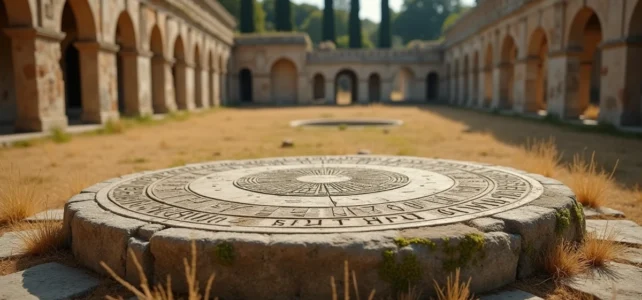
The same celestial body, dozens of names, thousands of years of stories. The sun bears as many names as it has traversed civilizations. From the G2V stellar classification used by astrophysicists to the Hélios of the ancient Greeks, each designation reflects a particular relationship with this star. Comparing these names is to measure the gap between systems of thought that sometimes have nothing in common, except for the light they receive.
Comparative table of sun names by cultural area
| Cultural area / discipline | Sun name | Register | Current status |
|---|---|---|---|
| Ancient Greece | Hélios | Mythological | Used in sciences (helios- prefix) |
| Ancient Rome | Sol | Religious and civil | Adopted in English astronomy |
| Ancient Egypt | Rê / Râ | Divine (supreme god) | Reference in Egyptology |
| Japan | Amaterasu | Mythological (female kami) | Living national symbol |
| Vedic India | Sûrya | Divine (Vedic deity) | Still invoked in Hinduism |
| Inca civilization | Inti | Divine (state cult) | Present on the flag of Peru |
| Modern astrophysics | G2V (yellow dwarf) | Scientific | Current spectral classification |
| Breton | Heol | Linguistic | Return in official signage |
| Basque | Eguzki | Linguistic / folklore | Common and symbolic use |
This panorama shows a clear initial gap: polytheistic societies personify the sun as a deity, while modern science reduces it to a spectral code. To explore the different names of the sun in detail, each category deserves careful reading of its original context.
Related reading : Discover the secrets of making Brazilian paçoca and its delicious tips

Masculine sun or feminine sun: what grammatical gender reveals
Most mythologies attribute to the sun a masculine and active principle. Hélios drives a chariot, Rê crosses the sky in a boat, Sûrya rides a team of horses. The pattern repeats from one continent to another.
Related reading : Discover all the news and updates in the field of insurance and protection
In contrast, several traditions break with this model. In Japan, Amaterasu is a goddess, not a god. She embodies sovereign light in Shintoism and remains the tutelary figure of the imperial family. Some nomadic peoples of Central Asia also regarded the sun as a “Mother sun.”
German provides a striking linguistic case: the sun is feminine (die Sonne), while the moon is masculine (der Mond). In Norse mythology, Sól is a female figure chased by a wolf across the sky. The grammatical gender of a celestial body is therefore never trivial: it carries the trace of an entire cosmological narrative.
Minority languages and the return of local forms
Since the 2000s, several minority languages in Europe have reintroduced their traditional forms to designate the sun in official documents and public signage. The Breton heol, the Basque eguzki, and the Welsh haul are regaining visibility.
This phenomenon goes beyond mere linguistic curiosity. It is part of cultural revitalization policies that directly affect cosmological vocabulary, because naming the sun in one’s own language reaffirms a relationship with the world distinct from that conveyed by dominant languages.
Mythological names of the sun and the political function of solar worship
The names of the sun are not mere religious labels. In the majority of documented cases, solar worship has served as a political lever.
- In Egypt, Rê was not just one god among others: the pharaohs presented themselves as his direct sons, which legitimized their absolute power over society.
- Among the Incas, Inti occupied the top of the pantheon. The sovereign, the Inca, claimed descent from the sun, and Cuzco housed the Coricancha, a temple entirely dedicated to this state cult.
- In Rome, the cult of Sol Invictus (the “Unconquered Sun”) was promoted to the rank of official religion by some emperors in the third century, long before the adoption of Christianity.
- Louis XIV adopted this symbolism by proclaiming himself the Sun King, transposing a millennia-old mythological archetype into the French absolute monarchy.
Each time, the mechanism is the same: associating earthly power with the most visible celestial body transforms human authority into a cosmic fact. The divine name of the sun then becomes a tool of governance.
Scientific names of the sun and modern stellar classification
Contemporary astrophysics designates the sun by its spectral classification: G2V, a yellow dwarf of the main sequence. This designation encodes the surface temperature, color, and evolutionary stage of the star.
The term Sol remains used in English scientific literature to distinguish our star from other stellar systems. It is from Sol that the adjective “solar” derives, omnipresent in space sciences, energy, and climatology.
New names for the sun in the digital age
Online culture generates its own appellations. Digital linguistics studies have documented, between the late 2010s and early 2020s, the spread of new metaphors and nicknames for the sun in multilingual tweets, often linked to Korean and Japanese pop culture.
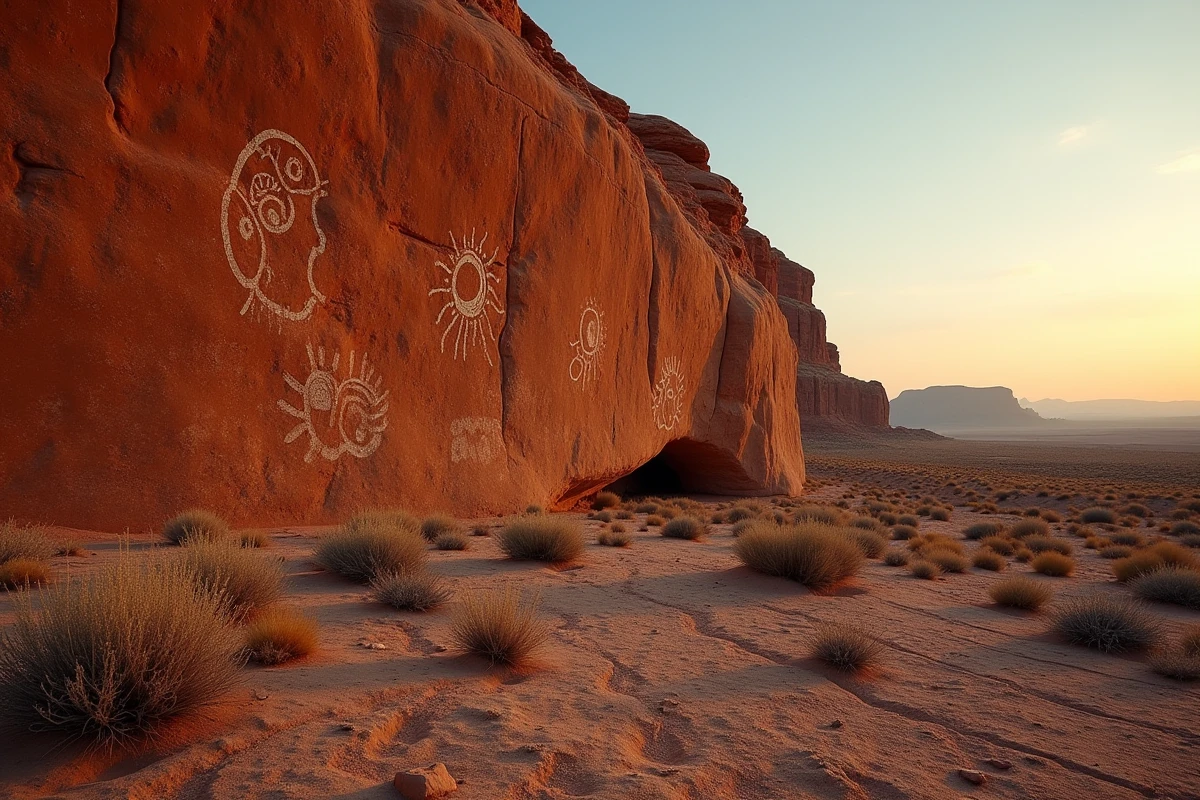
These neologisms do not appear in any dictionary, but they circulate on a large scale. The sun continues to accumulate names, no longer driven by priests or kings, but by the dynamics of social networks and fan communities.
Intercultural contact and coexistence of sun names
In the Amazon, ethnolinguists have been documenting a remarkable phenomenon since the 2010s: in some indigenous communities, the traditional name for the sun coexists with a “Christian sun” borrowed from Portuguese. This dual usage reflects a cultural stratification where missionary contacts do not erase the old vocabulary but superimpose upon it.
This Amazonian case illustrates a broader pattern. Wherever cultures enter prolonged contact, sun names multiply rather than replace one another. The star accumulates linguistic layers like a geological terrain accumulates sedimentary layers.
The list of sun names never closes. Each era, each language, each community adds its own entry, from Rê to G2V, from Amaterasu to contemporary hashtags. The last name of the sun has yet to be invented.