
The numbers don’t lie: Zara will definitively close its La Praille store at the end of 2025, a decision already made by the brand and the landlord. This closure, far from being a simple adjustment, is part of a restructuring of its Swiss presence, while other brand stores continue their operations.
The lease will not be extended, even though foot traffic had remained stable in recent months. The teams on-site have been informed; management is committed to supporting each employee through this transition. At this stage, it is impossible to measure all the repercussions on Zara’s presence in Geneva. Options for development and repositioning are still under discussion.
The closure of Zara La Praille: context and local stakes
Zara’s withdrawal from the La Praille shopping center is not an isolated case. It fits into a larger pattern: Inditex, the Spanish giant, is scaling back in medium-sized cities. In Saint-Nazaire, Valence, Angoulême, Nîmes: everywhere, these closures mark a pivotal moment for shopping centers and commercial streets. The impact is tangible. Commercial hubs like Ruban Bleu or Champ-de-Mars are feeling the blow: less activity, a shrinking offer, empty storefronts.
Here are the most visible aspects of this transformation for the local fabric:
- Job losses, which destabilize not only Zara employees but also an entire ecosystem of subcontractors
- Local elected officials, such as David Samzun or Valentine Wolber, who are sounding the alarm: the closure weighs on the economy and morale of the city
- A fragile balance between commercial outskirts and city center, to the detriment of urban vitality
For residents, this departure means a diminished offer and additional travel to access Zara collections. This withdrawal, which has been underway for several months, forces everyone to rethink their shopping habits and their relationship with these large international brands. The impact of the closure of Zara La Praille is felt both in daily life and in how cities redefine their commercial identity. Shopping centers lose a driver, and commercial streets seek new reference points.
What consequences for the brand’s image and strategy until 2025?
The announcement of the closure of La Praille reveals more than just a simple decision by Inditex: it crystallizes questions about Zara’s trajectory and its image among the French and Swiss public. The group has chosen: fewer physical stores, more online power. This transition, motivated by the pursuit of increased profitability and changing consumer habits, translates into a reduction of the global store count: 7,412 stores in 2020, 5,700 four years later. Zara is now focusing its presence in major cities and high-potential retail locations.
In this strategy, digital takes precedence. Zara is betting on strong e-commerce, investing in digital stores, and refining the remote customer experience. Certainly, this transformation distances the brand from certain neighborhoods and local audiences, but it responds to the acceleration of online shopping and the environmental pressure weighing on fast fashion. Inditex is showcasing its ambitions: reducing its carbon footprint, modernizing its stores, and adjusting its model to meet the expectations of a demanding clientele.
The evolution axes of Zara are clearly outlined:
- Modernized and digitized stores: connected fitting rooms in Paris, optimized customer journeys
- Strengthening of online commerce: adaptation to multichannel, fast delivery
- Communication on eco-responsible advancements, via Join Life or Better Cotton
The closure of La Praille does not come out of the blue: it is part of a methodical repositioning, where each choice aims to prepare the brand for the upheavals in the sector while maintaining Zara’s desirability.
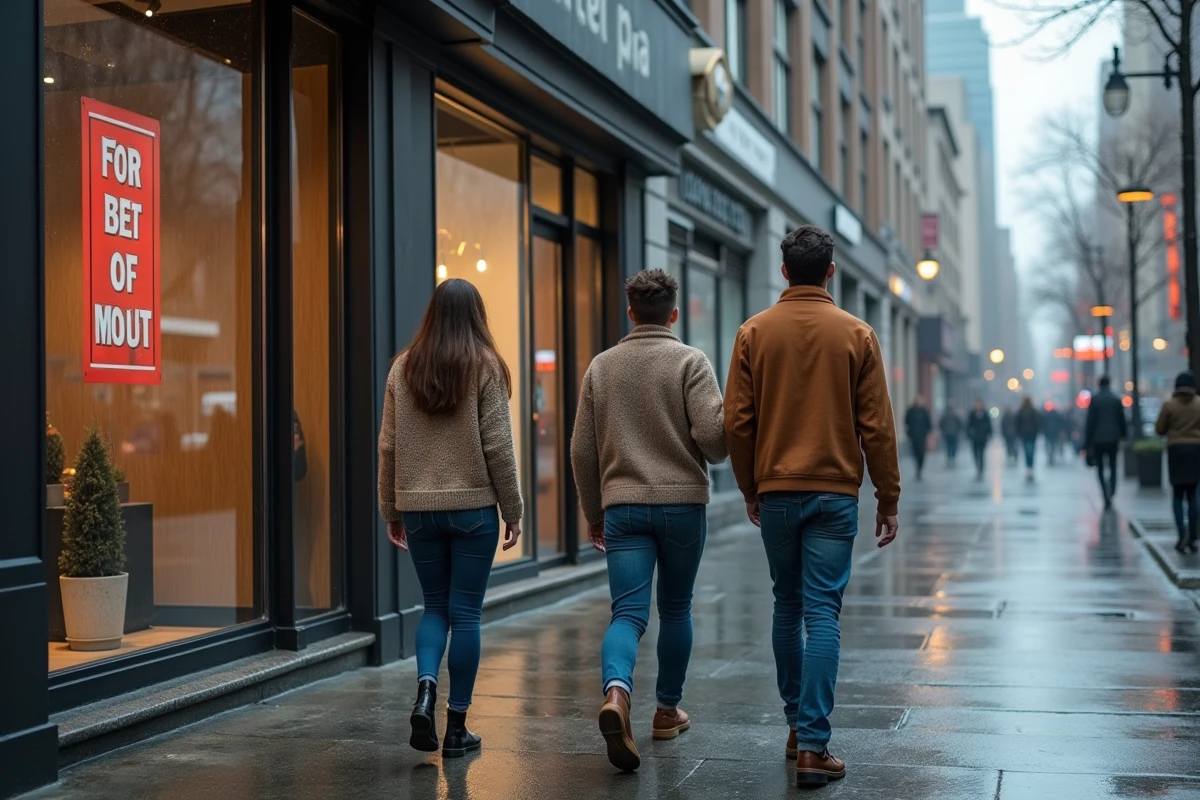
Towards a new model: what the situation at La Praille reveals about Zara’s evolution
Zara’s departure from the La Praille shopping center is not just a matter of numbers or leases. It reflects a profound transformation of the business model desired by Inditex. Gone are the standard stores scattered across all cities; the priority now is on spectacular concept stores and technological innovation. The flagship on the Champs-Élysées in Paris is an example: smart fitting rooms, autonomous ordering kiosks, rethought customer experience. The same logic applies in Saint-Étienne, where the Steel center store embodies this shift towards modernity and the rationalization of the offer.
But Zara is not just rethinking the form. On substance, the brand also wants to respond to criticism aimed at fast fashion. The Join Life collection, now predominant on the shelves, embodies this desire for change. More than half of the pieces carry this label, three-quarters use Better Cotton, and textile collection extends to fifteen countries in Europe. The message is unambiguous: the brand wants to combine industrial power with responsibility, to attract a clientele seeking meaning and transparency.
By leaving La Praille, Zara is making a choice: to focus on major metropolitan areas, abandon medium-sized cities, and invest in spaces where innovation and omnichannel are at the heart of the strategy. The future of the Spanish giant now hinges on its ability to combine volume, speed, and commitment, a risky equation, but one that could reshape the landscape of ready-to-wear.