Wallpaper is back at the center of decoration projects, driven by technical and regulatory developments that change the way wall coverings are chosen. Since January 2026, decree n°2025-1123 mandates mandatory environmental labeling for wall coverings, with a rating from A to E based on carbon impact. This framework changes the game for manufacturers as well as individuals renovating their interiors.
Environmental labeling and wallpaper: what carbon rating changes
Before this decree, the choice of wallpaper relied on aesthetic and price criteria. The A to E rating now requires displaying the carbon footprint of the product, from the manufacturing process to the end of life. For consumers, this means that a classic PVC panoramic wallpaper and a certified non-PVC, non-VOC non-woven wallpaper are no longer presented the same way on the shelf.
The ADEME report on sustainable building materials, published in March 2026, documents the rising trend of certified non-PVC, non-VOC non-woven wallpapers. These products promote better indoor air quality, a significant argument in poorly ventilated spaces like bedrooms or hallways.
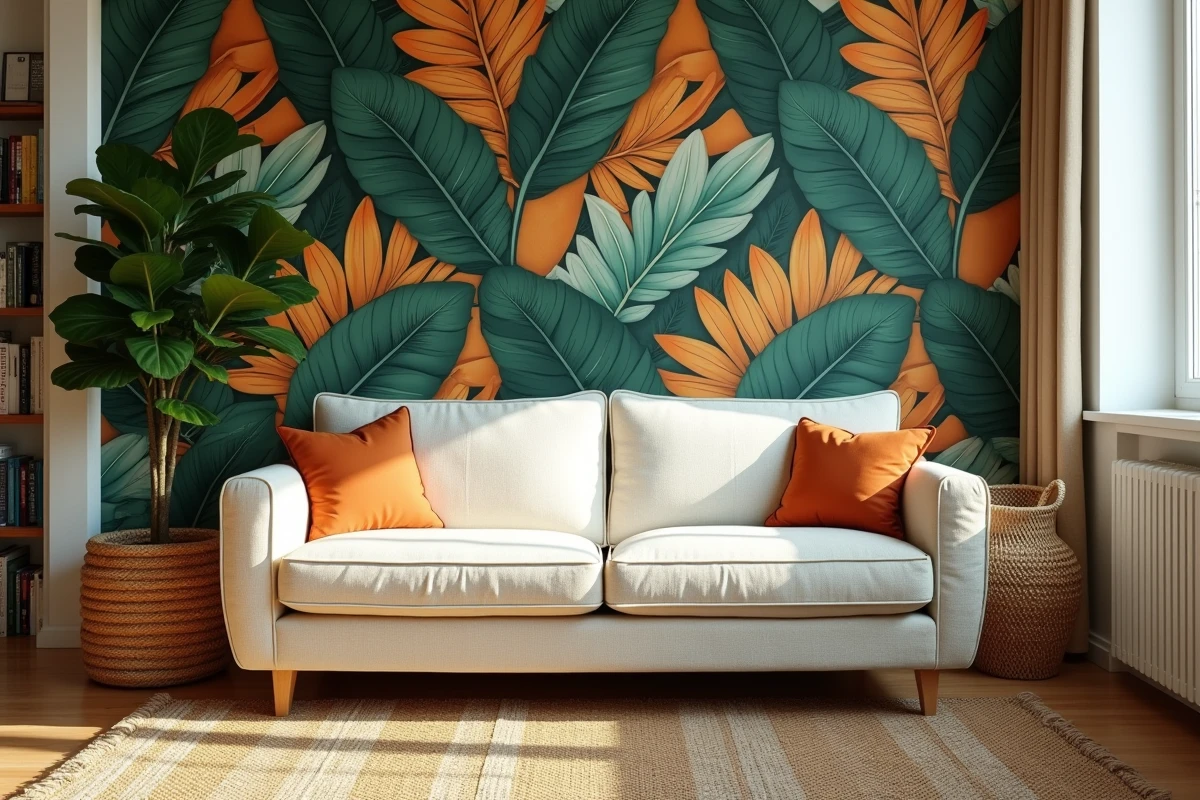
To explore the patterns and styles that fit into this dynamic, the inspirations from Ma Déco Maison provide a concrete visualization of the options available in both non-woven and panoramic formats.
Panoramic wallpaper and property value: beyond the decorative effect
Panoramic wallpaper has established itself as the star format of renovations. Real estate agents increasingly mention it in property descriptions. The question of its actual impact on resale value deserves to be asked without shortcuts.
A well-chosen panoramic wallpaper, applied to a load-bearing wall in the living room or main room, can alter the perception of space. In an apartment with modest square footage, a trompe-l’œil landscape or a botanical mural creates a visual depth that paint alone cannot achieve.
Field feedback varies on this point: some real estate professionals believe that a well-executed panoramic wallpaper enhances a property during viewings. Others feel that a strongly marked pattern may deter buyers who envision their own decor.
What makes the difference, according to case studies shared by the French Building Federation (FFB), is the quality of the installation and the choice of pattern. An anti-humidity panoramic wallpaper installed in the kitchen or bathroom, with adhesion suited to thermal variations, sends a signal of careful renovation. In contrast, cheap wallpaper that bubbles at the seams has the opposite effect.
Criteria that influence the perception of a property with wallpaper
- The coherence of the pattern with the room’s architecture: an oversized panoramic wallpaper in a low-ceiling space compresses the volumes instead of enlarging them
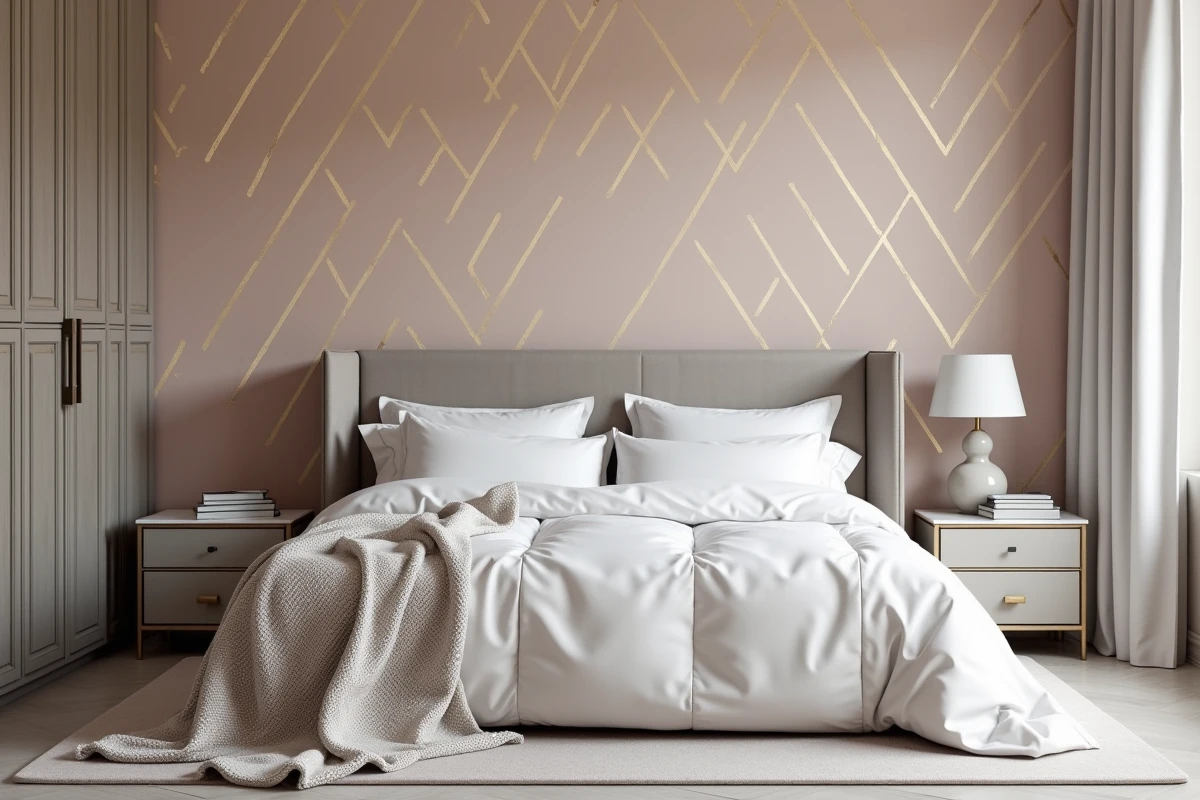
- The relative neutrality of the subject: natural landscapes, mineral textures, and discreet geometric patterns fare better than a very personal visual during resale
- The quality of the substrate: a non-woven wallpaper without PVC rated A or B reassures a buyer sensitive to air quality, especially in a child’s bedroom
AI-customizable wallpaper: adapting to irregular walls
Digitally customizable wallpapers via artificial intelligence represent a notable technical evolution. According to an analysis by Maison & Travaux published in May 2026, these products outperform standard models when it comes to adapting to irregular architectural constraints: sloping walls, niches, non-right angles.
The principle relies on a scan or photo of the wall, processed by an algorithm that adjusts the pattern to avoid visible seams and distortions. The result is a custom strip, printed on demand. This approach reduces material waste, as each roll corresponds exactly to the surface to be covered.
The available data does not yet allow for conclusions about the long-term durability of these digital prints compared to traditional inks. Initial feedback pertains to recent installations, and there is insufficient time to assess color retention after several years of exposure to light.
What AI customization concretely changes
- The elimination of the matching problem: the pattern is calculated for each strip individually, which eliminates the offset between two strips
- The ability to integrate architectural elements (beams, outlets, windows) into the design instead of having to work around them
- A higher cost per square meter than standard wallpaper, but with less waste and fewer surplus rolls purchased
Wet rooms and wallpaper: field feedback from the FFB
Applying wallpaper in kitchens or bathrooms has long been discouraged. Innovations in anti-humidity panoramics are changing the situation. The FFB’s case study on post-renovation decor innovations, dated April 2026, reports a growing preference for these products in wet areas.
Improved adhesion despite thermal variations is the central technical point. Traditional wallpaper peels off when steam infiltrates between the wall and the covering. Anti-humidity versions use specific adhesives and micro-perforated substrates that allow the wall to breathe while keeping the strip in place.
However, this application remains limited to areas without direct contact with water. Wallpaper does not replace tiles behind a shower or sink, but it can dress an adjacent wall without risk of peeling if the room’s ventilation is functioning properly.
The wallpaper market in 2026 is structured around three axes: environmental compliance, technical customization, and resistance to real usage conditions. Aesthetic trends, whether they involve botanical patterns, mineral textures, or panoramic murals, now exist within a framework where product performance is as important as its appearance.