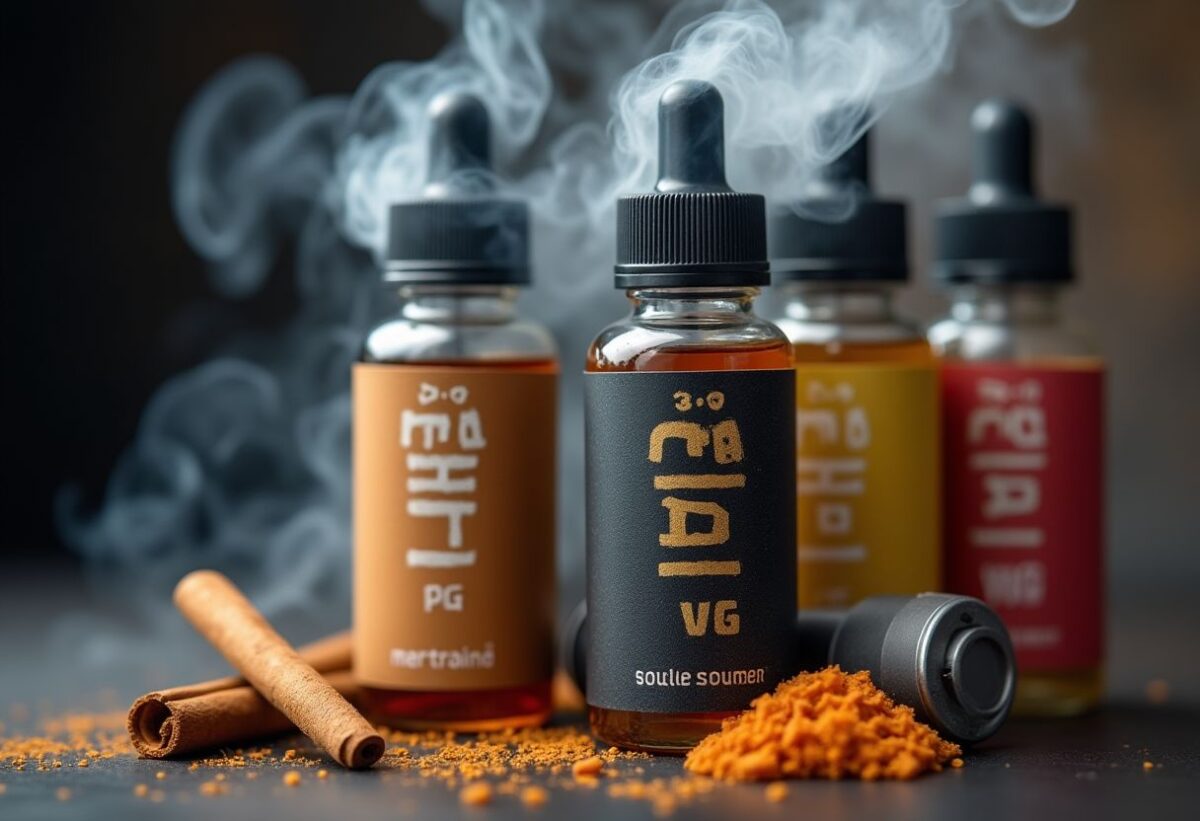
In the vast world of vaping, choosing e-liquid is more than just a matter of taste. Vapers often experience a burning sensation on the tongue, leading to questions about the influence of e-liquid composition on this phenomenon. E-liquids are made up of several elements, each playing a specific role in the vaping experience. From the proportion of propylene glycol (PG) and vegetable glycerin (VG) to flavors and nicotine, each ingredient can potentially alter the mouthfeel.
The components of e-liquid: propylene glycol and vegetable glycerin
The two main components of an e-liquid are propylene glycol (PG) and vegetable glycerin (VG). Each has distinct properties that influence the texture and sensation of vaping.
- Propylene Glycol (PG): this colorless liquid is primarily used to create a throat hit, often sought after by those transitioning from traditional cigarettes to vaping. PG has the ability to effectively carry flavors. However, its chemical structure can sometimes cause a burning sensation on the tongue, especially in sensitive individuals.
- Vegetable Glycerin (VG): thicker than PG, VG produces a dense and creamy vapor. It is generally smoother in the mouth than PG, which can reduce the burning sensation. Nevertheless, some vapers report that high levels of VG can lead to coil gunking, thus affecting the overall vaping experience.
The influence of flavors and additives
Flavors play a crucial role in the puff experience, but they can also be responsible for a burning sensation on the tongue. Additives and flavoring agents, although often used in small quantities, can sometimes irritate the mouth.
Menthol or cinnamon-based flavors, for example, are known to be more aggressive. They provide an intense stimulation that can be perceived as a burn. Other, milder flavors tend to be more subtle and less likely to cause this sensation.
It is also possible that some users are sensitive or allergic to certain chemical components used in flavors. One solution is to try different types of flavors to identify those that cause undesirable reactions.
The role of nicotine
Nicotine is another essential component of e-liquids. Its concentration can directly influence the vaping sensation.
In addition to its addictive effect, nicotine has a sharp nature that can enhance the burning sensation on the tongue. E-liquids with high nicotine content are often more irritating to the mouth and throat. For those looking to reduce this sensation, one solution may be to opt for e-liquids with a lower nicotine level. It is also interesting to note that nicotine salts, an alternative form of nicotine, can provide a smoother experience while maintaining the need for nicotine under control.
External factors
Aside from the chemical composition of e-liquids, several external factors can influence the burning sensation. The characteristics of the vaping equipment, such as the type of coil or battery power, play a significant role.
The frequency of puffs taken by the vaper is also a factor to consider. Overuse without breaks can also contribute to this unpleasant sensation.
Ultimately, the comfort and satisfaction of the vaper depend on a balance between these variables. For those seeking a vaping experience without irritation, it is often necessary to test and adjust several aspects, from the choice of e-liquid to the settings of the equipment.
By exploring the different aspects of e-liquid composition and their impact on the burning sensation, it becomes clear that several factors interact to influence this sensory experience. The differences between PG and VG, the chosen flavors, nicotine concentration, and even the settings of the vaping device are all elements that can modulate the sensation on the tongue. For those sensitive to this sensation, it is often recommended to experiment with different compositions and configurations to optimize their vaping experience.